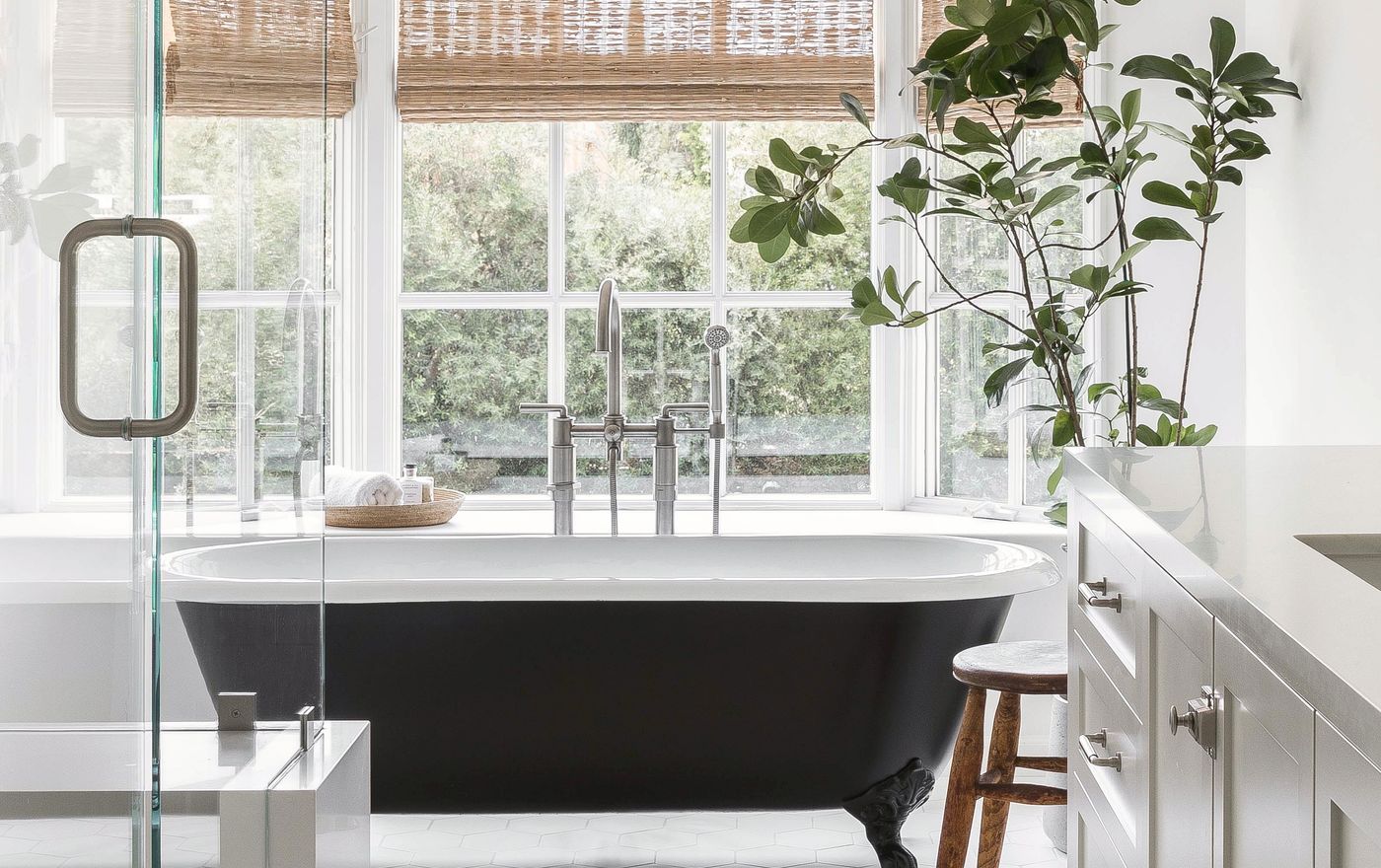
Most bathroom renovations begin with a tile. We would rather they begin with a morning. How you move through the room, where the light lands, what you reach for first — get those right and the finishes become easy. Get them wrong and even expensive materials feel like a compromise.
Bathrooms are the smallest rooms in the house and the most demanding. Water, steam, heat and daily traffic all concentrate in a space that is often windowless and always hard-working. That is why a calm bathroom is rarely a styling decision. It is a planning decision, made early, before anything is ordered.
Start with the routine, not the mood board
Before samples, spend a week noticing how the room is actually used. Who is in it first thing, and what do they need within reach? Is there a shared rush, or is it a slow, private ritual? A bathroom that accommodates a hurried weekday morning and a long Sunday soak usually needs one thing more than anything else: a clear, uncluttered place for the things you use every day.
Write down the friction points. The towel that never dries. The mirror that fogs. The step over the bath that someone in the house has started to avoid. These notes become the brief, and the brief becomes the budget conversation.
A good bathroom is boring underneath and beautiful on top. Everything you can see depends on everything you cannot.
Waterproofing is the whole ballgame
Every finish sits on top of a waterproofing system, and the system decides how the room ages. In a properly detailed bathroom, the wet area is tanked as a continuous membrane, corners and junctions are reinforced, and the floor falls gently towards a drain that is actually positioned under the shower. Where a bath meets a wall, or a screen meets a tray, the detail matters more than the brand name on the sealant.
Ask to see how your contractor intends to waterproof, and ask what happens at the door threshold. Water escaping sideways is the quiet cause of most of the damage we are called in to repair.
Ventilation, sized for steam
Extractor fans are often chosen by price and installed by habit. Instead, match the fan to the room volume and make sure it runs long enough to clear the moisture after everyone has left. Duct runs should be short, smooth and insulated, exhausting outside rather than into a loft. If the room has a window, that is a bonus, not a substitute.
Layout: give everything a home
A cramped bathroom is usually a storage problem dressed as a space problem. Consider:
- A recessed niche in the shower instead of bottles on the floor.
- A shallow full-height cabinet rather than a deep one you cannot reach into.
- A wall-hung vanity that frees the floor and makes cleaning simple.
- Hooks at the right height for every member of the household, including the shortest.
If the room allows it, separate the wet zone from the drying zone. Even a partial screen keeps towels and toiletries from living in a permanent mist.
Daylight, and the light after dark
Borrow light where you can with a larger window, a sun tunnel or a glazed panel, and keep the shower screened so the room does not become a cave. Then layer the artificial light: a soft general wash, a brighter task light at the mirror, and a low, warm light for evening. Dimmers cost little at construction stage and change the room more than any tile ever will.
Warm-toned bulbs flatter skin and timber. Cool white light belongs in a workshop, not above a bath.
Materials that forgive real life
Choose surfaces for how they wear, not just how they photograph. Porcelain and natural stone both perform beautifully; stone needs sealing, porcelain does not. Large-format tiles mean fewer grout lines to keep clean, but they need an extremely flat substrate underneath. Timber and laminate add warmth but want to be away from direct spray. Brushed and unlacquered metals soften over time, which is either patina or damage depending on your temperament — decide which before you commit.
The fittings you touch
Spend where your hands go. A good tap, a quiet extractor, a soft-close seat and a shower valve that holds temperature are felt every single day. Decorative accessories can be replaced later; these cannot.
Sequence, and why it saves money
Strip-out, first-fix plumbing and electrics, waterproofing, tiling, second-fix, then decoration. A bathroom that is ordered out of sequence pays for it twice. Every item has a lead time — tiles, brassware, glass, joinery — and those lead times are what determine whether the room stalls halfway through. Order the long-lead pieces before demolition begins.
Plan for the awkward middle: where the new bath is stored, how the household washes during the works, and who makes the decisions when a wall turns out to be different from the drawings. Naming one decision-maker keeps a renovation moving.
Where a professional earns their keep
Anyone can fit a vanity. The value of an experienced team shows up in the fall of the floor, the height of the niche, the order of the trades and the way the room is tested before handover. A bathroom should be checked with running water, not just admired with the taps off.
When you are ready, we would be glad to look at your plans — or help you start them. Book a consultation and we will talk through what your room can genuinely offer.
Planning something similar?
Send us a few details and we will suggest the most sensible next step — including whether now is the right time to do the work.